01
Feed
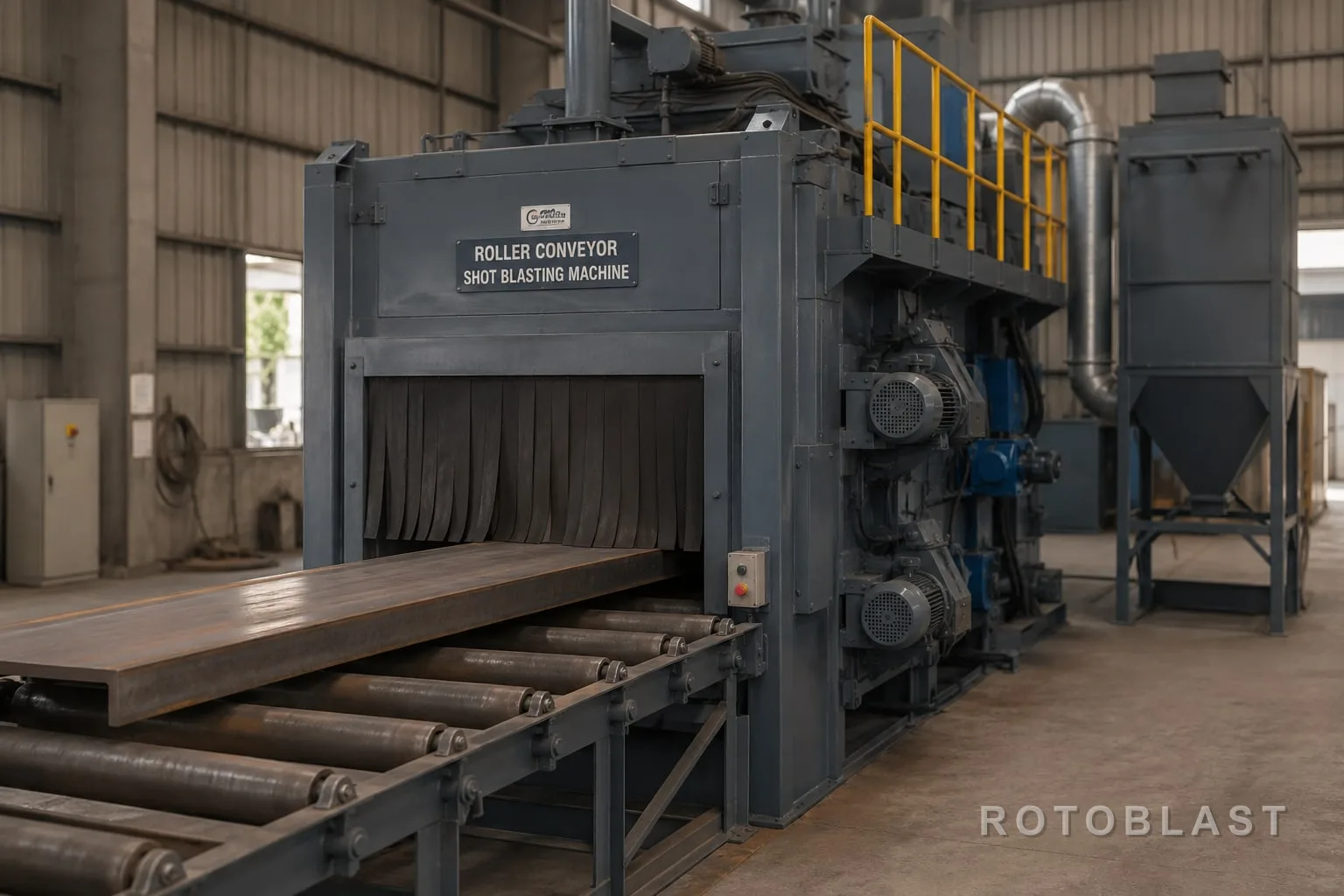
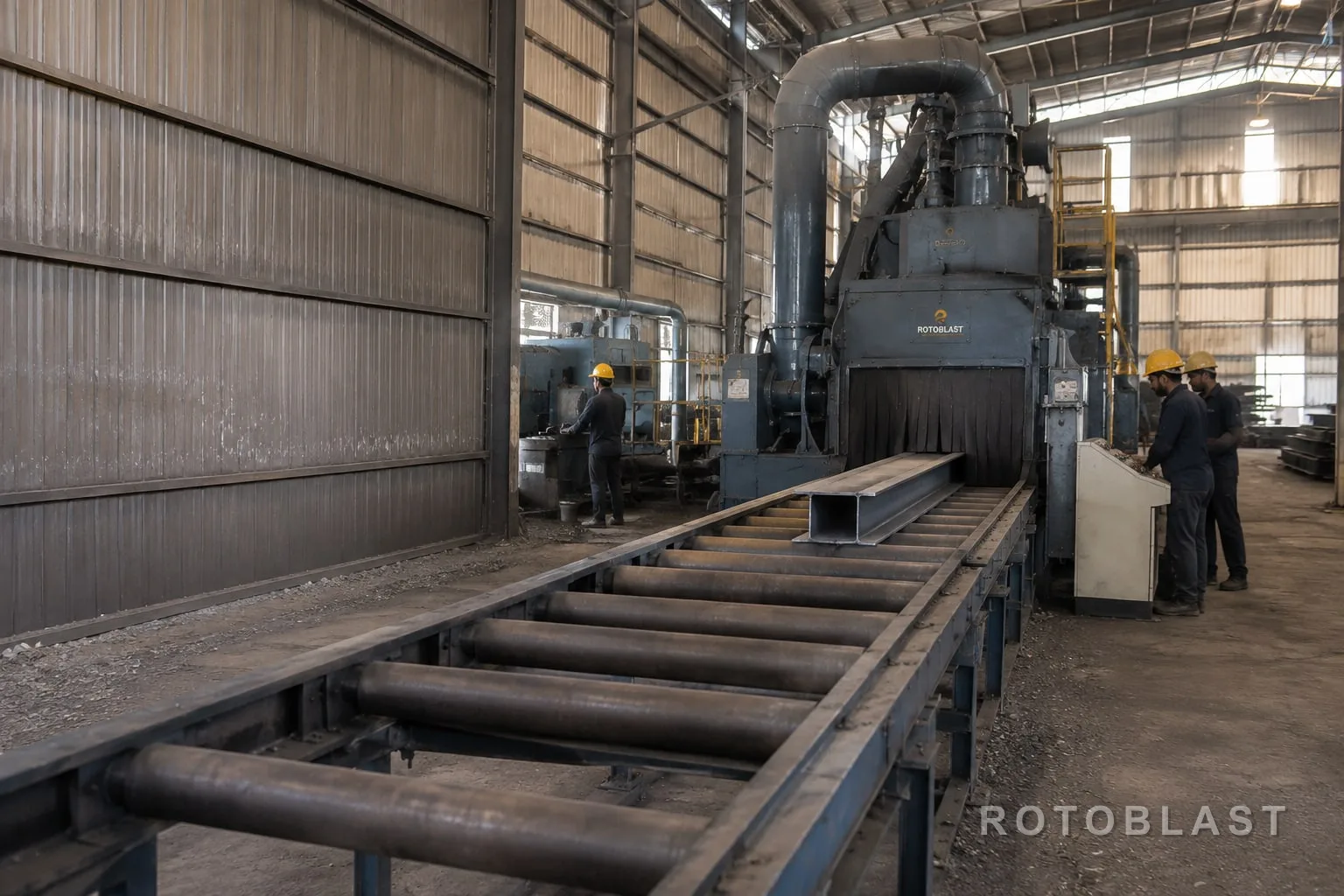
Sections enter on driven rollers at a controlled speed. How tightly they are spaced here decides whether the tunnel ever runs empty.
CONTINUOUS PASS-THROUGH
Plate, pipe, beam and bar cleaned in one uninterrupted pass — throughput set by line speed, not by how fast anyone can load.
WHAT ACTUALLY DECIDES OUTPUT
Get one of the three wrong and the other two cannot compensate for it.
ONE PASS, SIX STAGES
Sections enter on driven rollers at a controlled speed. How tightly they are spaced here decides whether the tunnel ever runs empty.
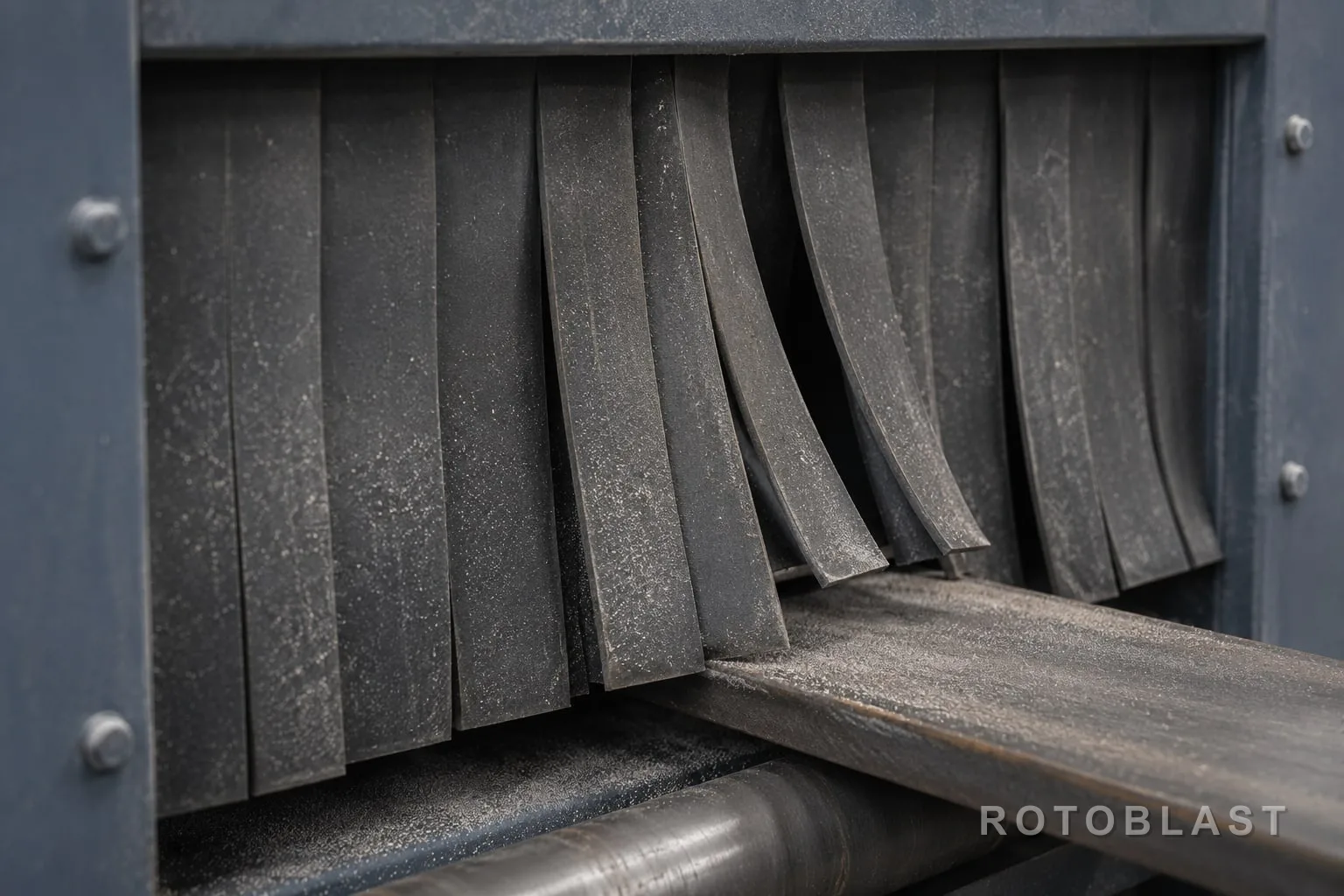
Staged curtains and vestibules hold the abrasive inside the tunnel while the part keeps moving through them.
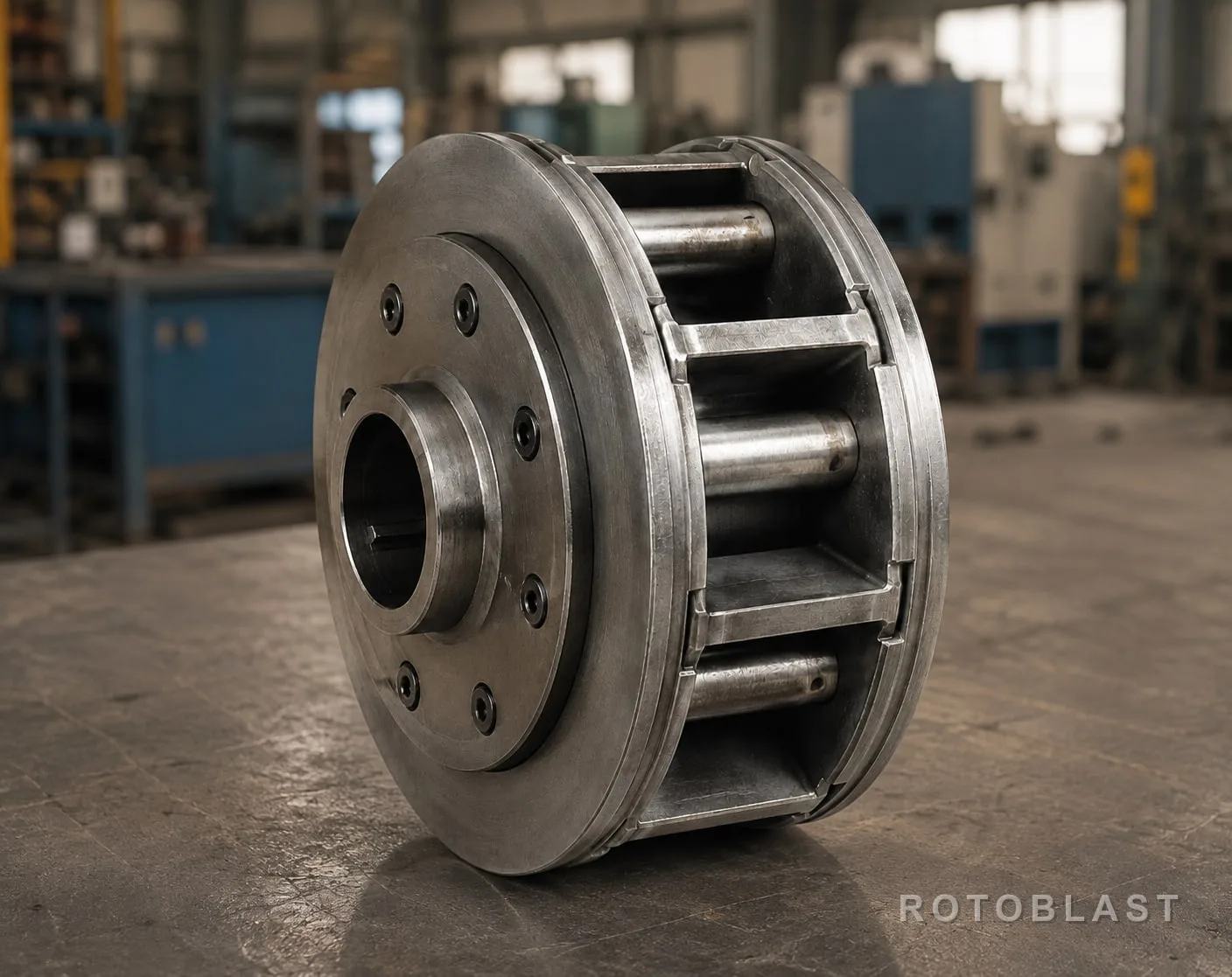
Wheels above, below and beside the tunnel clean every face at once, throwing abrasive at 70 to 85 metres per second.
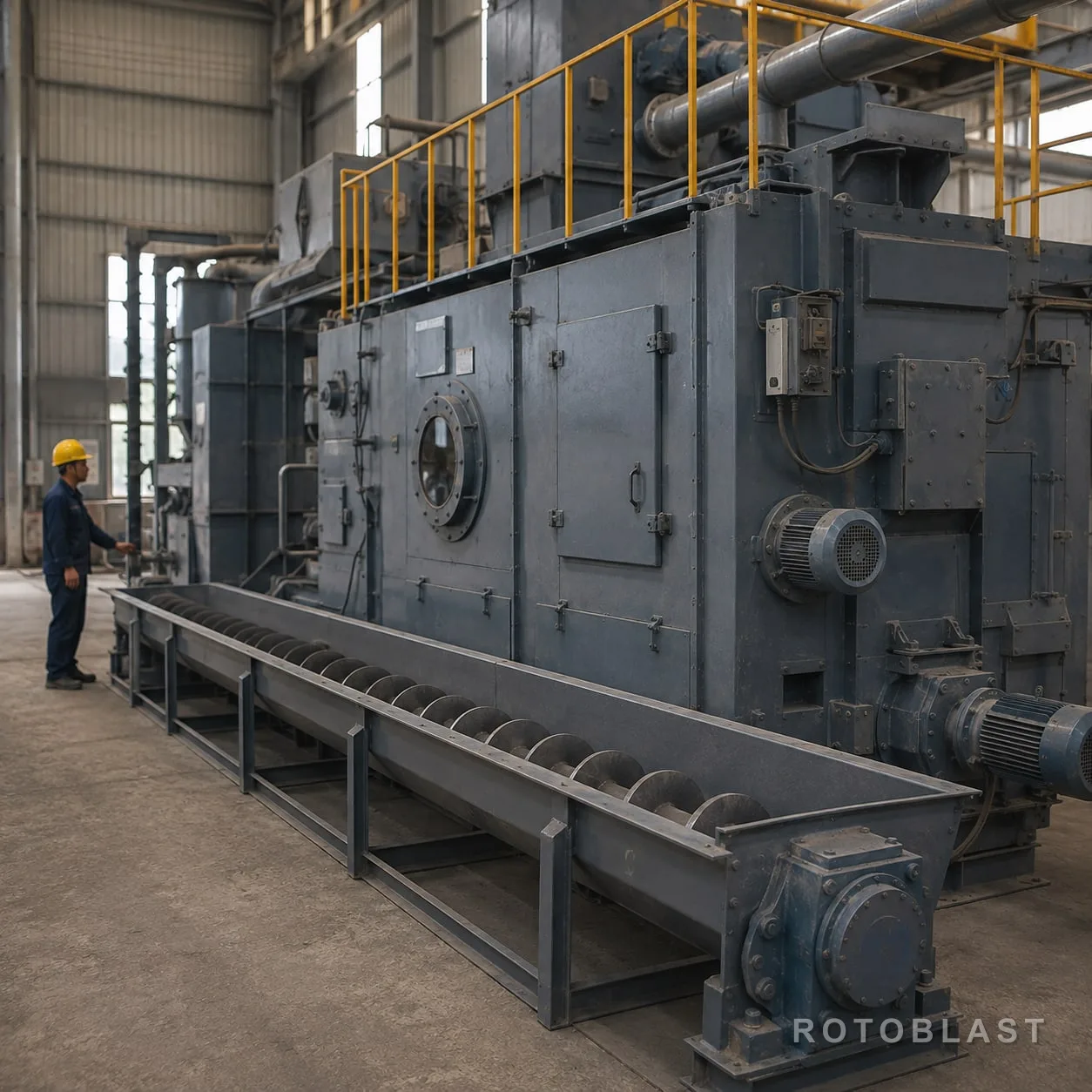
Spent abrasive drops through the floor grating to the hopper and returns by screw conveyor and bucket elevator.
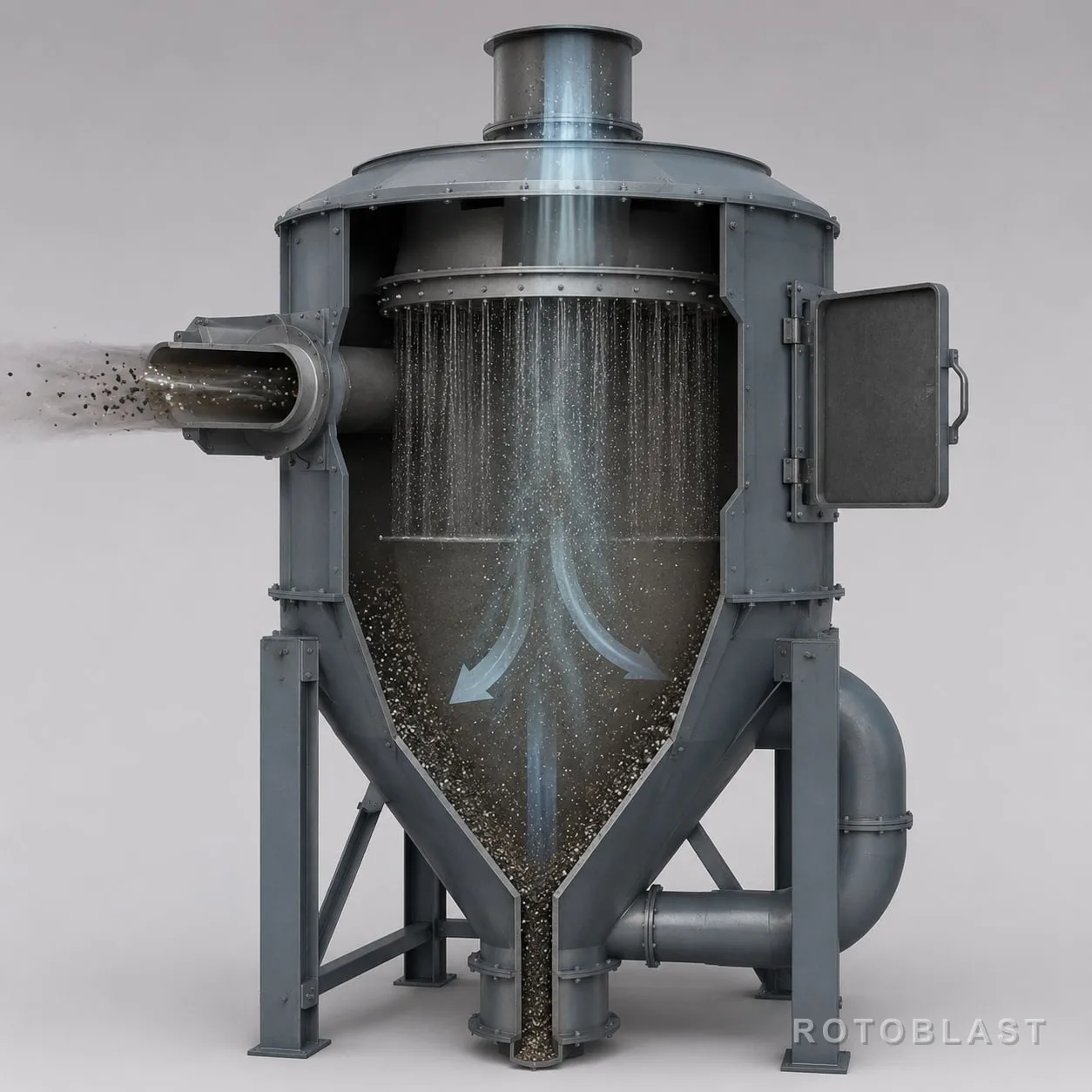
The air-wash separator strips out dust and broken media, holding the operating mix steady while the line keeps running.
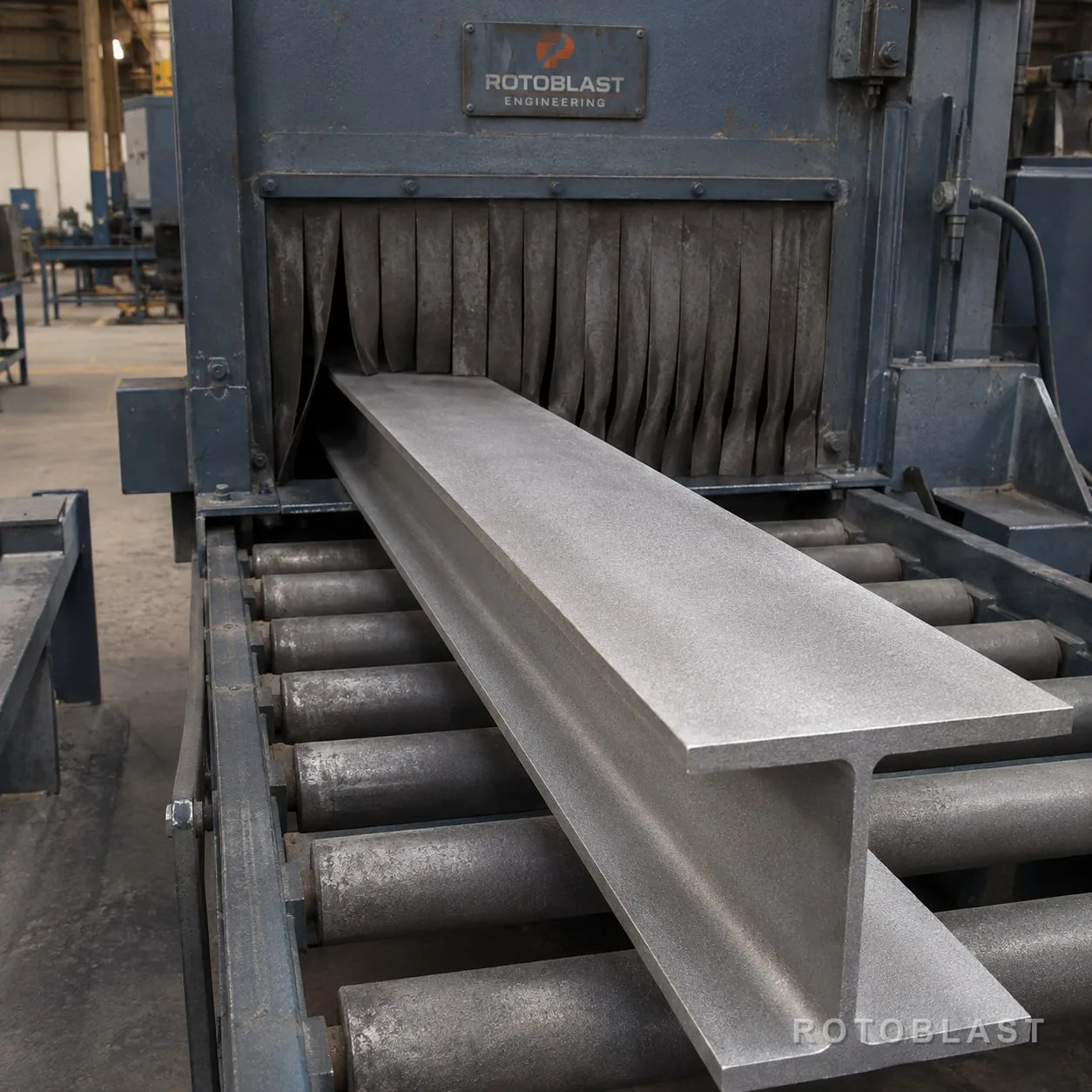
Cleaned sections leave on the outfeed conveyor at blast-grade finish, ready to go straight to primer.
Six stages, one pass, no handling in between.
WHAT EXPERIENCED PLANTS WATCH
Most lines are commissioned at a single speed and left there for years. Contamination changes with the supplier, the season and how long stock sat outside. A fixed speed either wastes throughput on clean steel or ships under-cleaned steel to the paint shop.
A pass-through line costs the same to run whether or not a part is inside it. Wheels, dust collector and drives all draw power regardless. Closing the gaps between parts is the cheapest throughput most plants never claim.
Continuous blasting moves far more abrasive per hour than batch work. When screws, elevators or the separator are specified light, they become the real bottleneck long before the blast wheels ever do.
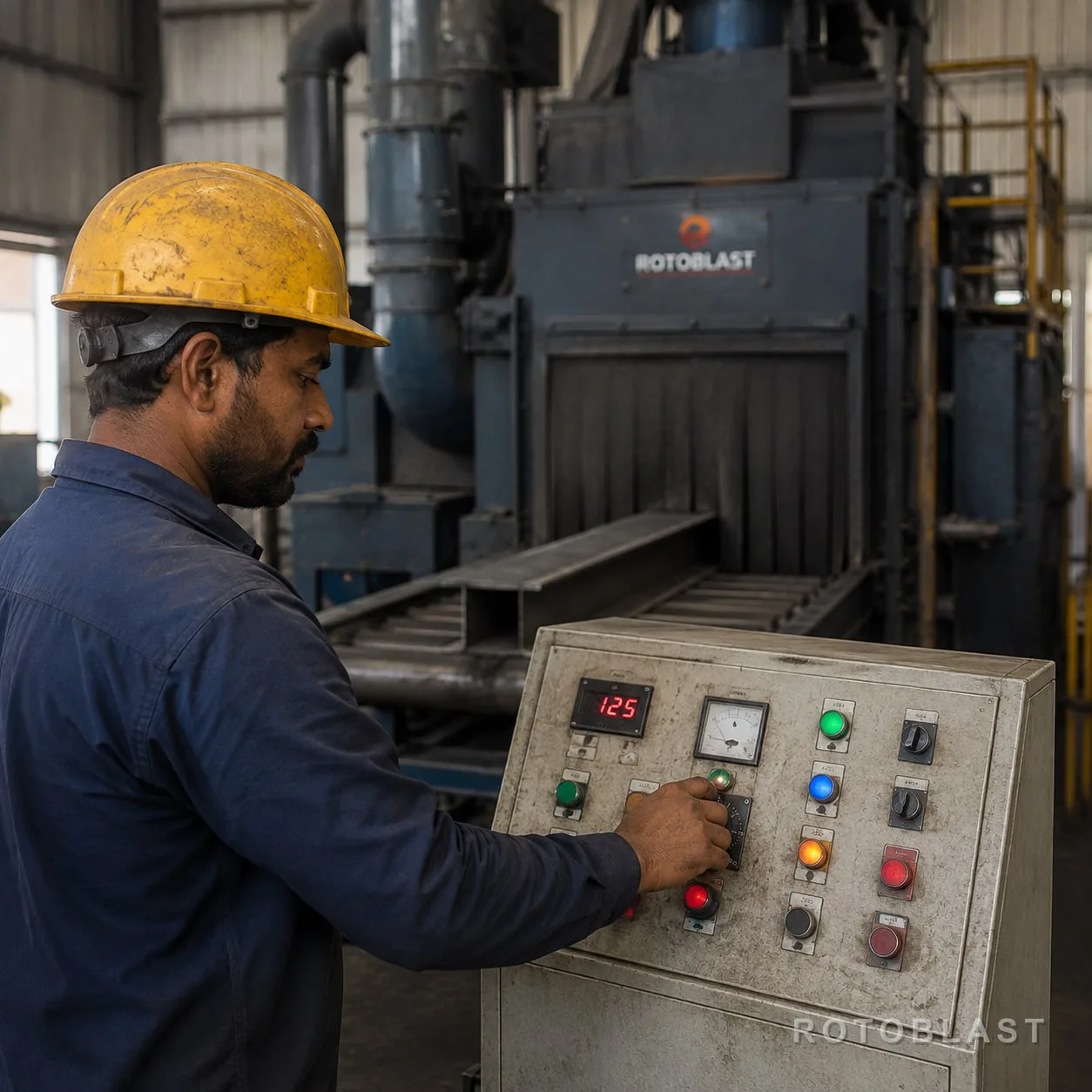
None of these show up as a breakdown. They show up on the cost sheet.
SPECIFYING THE LINE
The figures below are Rotoblast's standard build range. Every one of them is a decision that is expensive to revisit once the foundation is poured.
PROCUREMENT & SUPPORT
Lines are engineered and built at our works in Faridabad, India, and supplied to manufacturers, foundries and fabrication companies in India and across the UAE.
Send the section, the contamination and the tonnage per shift. You receive a configuration sized against those figures and a written quotation for it.
A confirmed manufacturing and delivery schedule is issued in writing at order confirmation, against your final agreed configuration.
Rotoblast engineers support installation, commissioning and machine setup, and stay with the line until it is meeting the finish your specification calls for.
Manufacturing lead time
Indicative only. Actual delivery depends on machine configuration, customisation, production scheduling, material availability and project scope. Every project receives a confirmed manufacturing and delivery schedule at order confirmation.
What support covers
Line speed, wheel count and width all follow from what you actually run. Tell us the section, the contamination and the tonnage per shift, and an engineer will size the line against it.
Also worth reading
Tell us your application, part size and throughput — we'll respond with a specification and price.
Faridabad, Haryana, India
Mon–Sat, 9:30 AM – 6:30 PM IST