UPPER WEAR LINER · BLAST CHAMBER PROTECTION
The plate that takes the hits, so your machine body does not.
Inside a blasting machine, abrasive flies everywhere. The upper wear liner stands in the way and gets damaged on purpose. Changing it is cheap. Repairing the cabinet behind it is not.
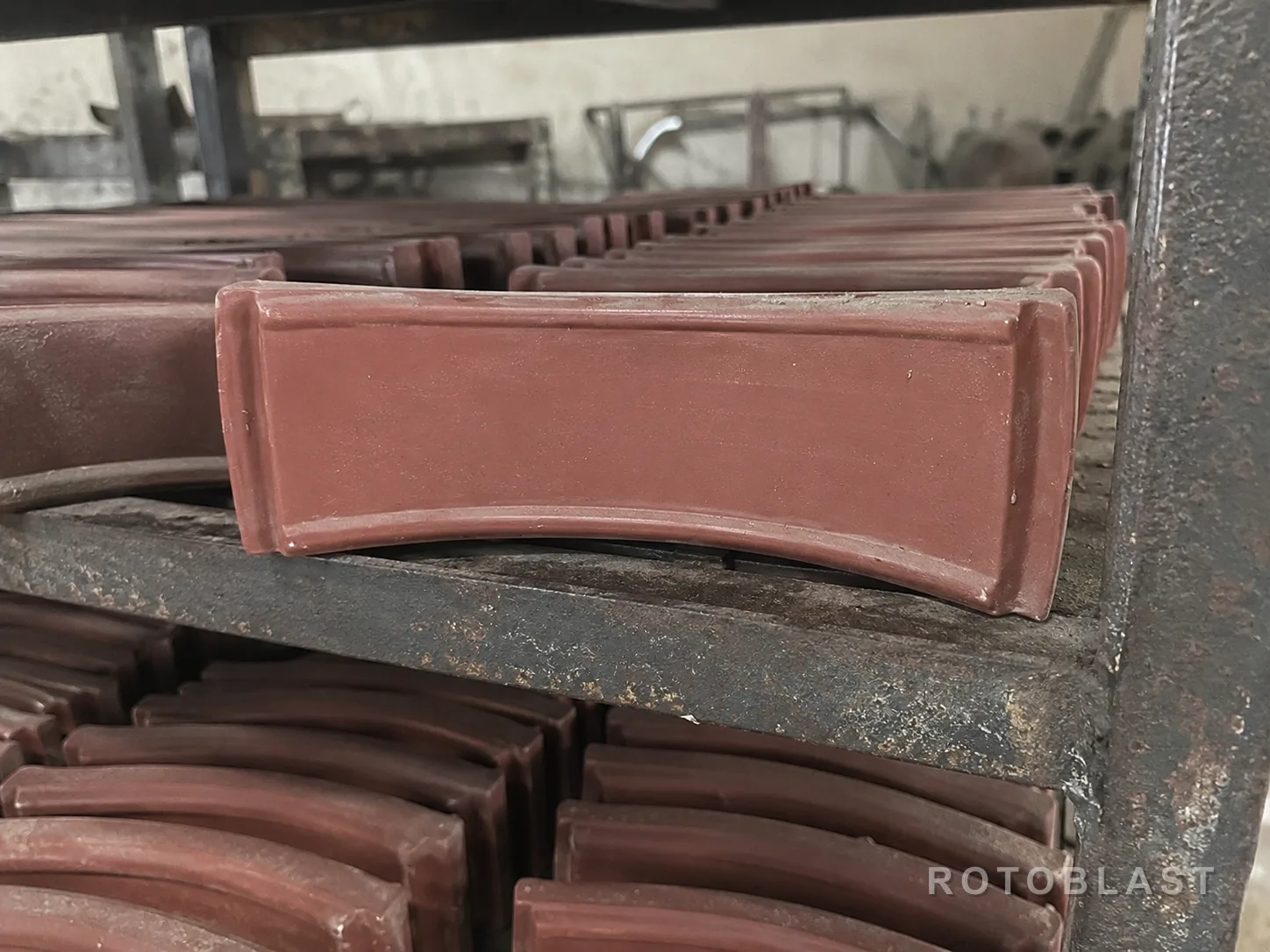
WHERE THE WEAR ACTUALLY HAPPENS
One spot always goes first.
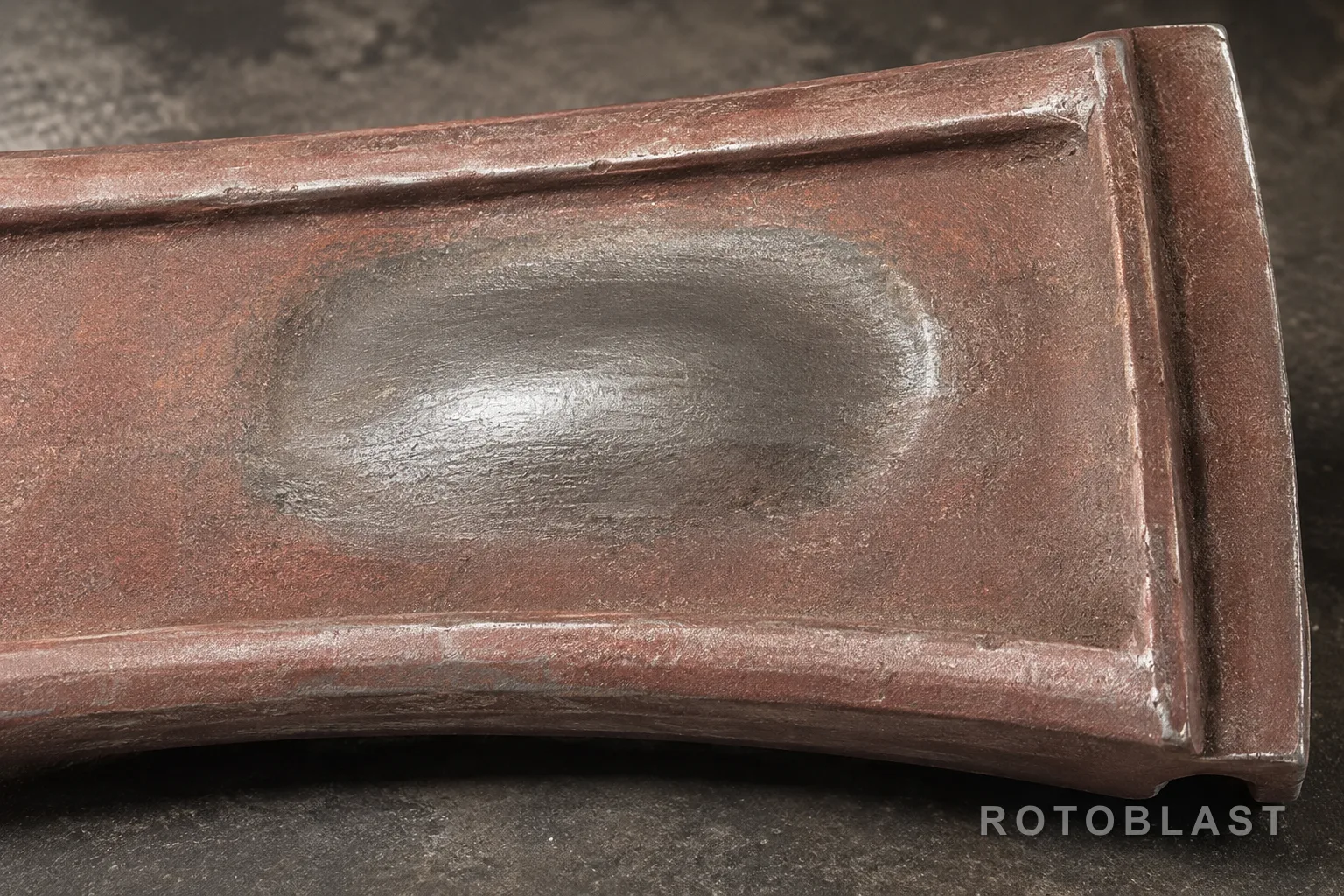
The blast wheel throws abrasive in one direction. So one patch of the liner takes far more hits than the rest. Everyone on the shop floor calls it the hot spot. That one patch decides when you change the whole plate.
Hot spot
Straight in the path of the blast. Wears many times faster than the rest.
Around it
Catches abrasive that bounces off the part and the walls.
Corners and edges
Barely touched. Often still thick when the middle is finished.
Bar lengths show how fast each area wears compared to the worst one. They are not a measurement from any one machine — your own pattern depends on how your wheels are aimed.
- 01
Measuring the wrong place gives you false confidence
Most people check the liner where it is easy to reach. That is usually the edge, and the edge is still thick. The hot spot in the middle may already be half gone. Always measure the worst area, not the easiest one.
- 02
A hole appears suddenly, not slowly
The plate does not thin down evenly and give you warning. It stays fine everywhere except one patch, and that patch goes through. By then abrasive is already hitting the cabinet behind it.
- 03
The hot spot moves if the machine changes
Change the blast wheel setting, the abrasive size or the way parts are loaded, and the stream lands somewhere new. The old worn patch stops growing and a fresh one starts. After any such change, check the liner in a new place too.
CHOOSING THE MATERIAL
Manganese is not always the right answer.
Most people ask for manganese liners by habit. Sometimes that is correct. Sometimes it wears out faster than a cheaper plate would have. The deciding factor is how hard the abrasive is hitting.
If the hits are hard
Manganese steel
Manganese needs heavy knocks to work. The hitting is what makes its surface hard. Under a strong blast the surface goes from soft to very hard while the metal underneath stays tough, so it takes the punishment without cracking.
How manganese hardens itselfIf the hits are light
Abrasion resistant plate
This is the part most buyers get wrong. If the blast is gentle, manganese never gets hard. It stays soft and wears away faster than a plain hard plate would have. Light, sliding, rubbing wear is a job for a plate that is already hard when you fit it.
How to tell which one you have
Look at a used liner. If the worn surface is dented and beaten, the hits are hard and manganese suits you. If the surface is smooth and polished, like something has been rubbing over it, the hits are light and a hard plate will last longer.
WHEN TO CHANGE IT
Change it by thickness, not by the calendar.
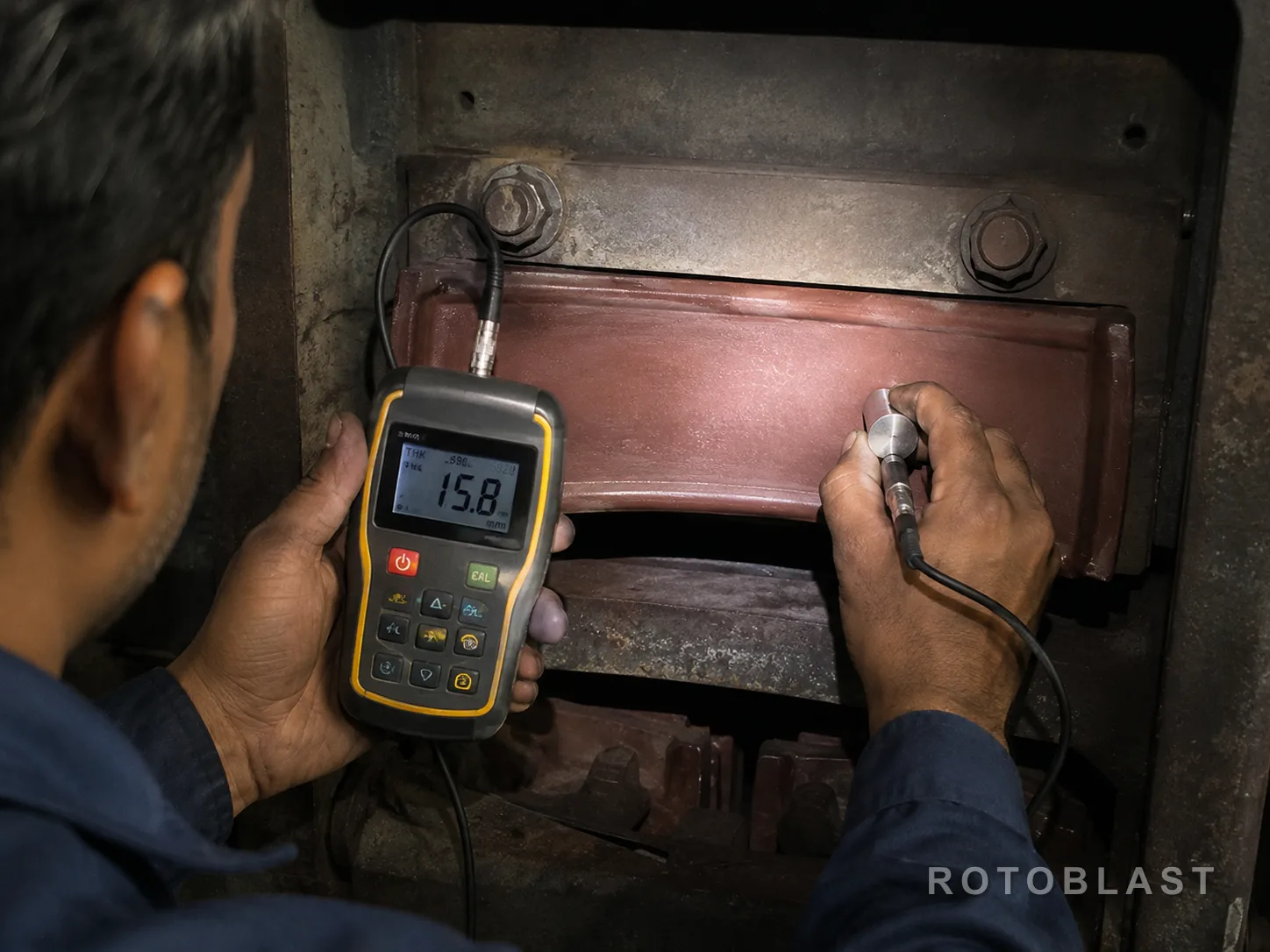
There is no fixed number of months. A liner lasts as long as your abrasive, your blast setting and your working hours allow. So do not guess from a date. Measure the thinnest point and act on that.
New
Record the starting thickness
Write it down on day one. Without it you cannot tell how much is gone.
Part worn
Swap the plate positions
Move the hot-spot plate to a quiet position and bring a lightly worn one into the hot spot.
Near the limit
Order the replacement now
Order while the machine is still running. Waiting means ordering during a breakdown.
Worn through
Stop and inspect the cabinet
Abrasive has already been hitting the machine body behind the liner.
Swapping plates gets you more life from the same set
The corner plates are barely worn when the middle one is finished. Move them around before the hot-spot plate is too far gone. You use up the thickness you already paid for, instead of throwing away plates that still have metal left in them.
WHY LATE REPLACEMENT GETS EXPENSIVE
A cheap part protects an expensive one.
A liner is a bolt-on plate. The cabinet behind it is the body of the machine. Once the liner is gone, the damage moves to the part you cannot unbolt.
- 01
The liner wears through
One patch opens up. Everything else still looks fine, so it is easy to miss.
- 02
Abrasive starts hitting the cabinet
The machine body was never meant to take the blast. It has no protection of its own.
- 03
The cabinet gets thin, then holes
Now abrasive escapes. You lose media, dust gets out, and the working area gets dirty.
- 04
It becomes a welding job
Cutting and welding a new section into the cabinet means the machine is down for days, not hours. The liner would have been a few hours with spanners.
The cost of changing a liner early is known. The cost of changing it late is whatever the cabinet repair turns out to be.
ORDERING THE RIGHT ONE
Liners are not the same from one machine to another.
Two machines can look alike and take completely different liners. The bolt holes, the thickness and the curve are all different. Sending a photograph is faster and safer than sending a part number from an old invoice.
- 01Machine make and model
- Narrows it down before anything is measured.
- 02A photo of the worn liner in place
- Shows the bolt pattern and how the plates overlap.
- 03Thickness of a new plate, if you know it
- Old and new plates differ. Thickness decides fitment and life.
- 04Overall plate size and hole spacing
- A tape measure reading is enough to confirm the pattern.
- 05What you are blasting, and with what abrasive
- Tells us whether manganese or a hard plate suits your wear.
One thing worth checking on any quotation
Good liners are made to overlap each other where they meet, so there is no straight gap running through to the cabinet wall. Abrasive finds any gap it can. Ask your supplier how the plates join. If the answer is that they simply sit edge to edge, the cabinet behind them will start wearing at every joint.
Made at our works in Faridabad, India, and supplied to foundries, fabrication companies and machine owners in India and across the UAE.
Lead time
Indicative only. It depends on size, quantity, material and production scheduling. A confirmed schedule is given at order confirmation.
What support covers
- Identifying the liner from a photo
- Material choice for your wear pattern
- Fitment and overlap guidance
- Inspection method
- Long-term technical assistance
Send a photo of the worn plate.
That one picture tells us the make, the bolt pattern, how the plates join and how your machine is wearing. It is quicker than a part number and it removes the guesswork for both of us.
Rotoblast manufactures this part alongside the rest of the wear items a shot blasting machine consumes. See every wear part we supply
Request a quote
Tell us your application, part size and throughput — we'll respond with a specification and price.
Faridabad, Haryana, India
Mon–Sat, 9:30 AM – 6:30 PM IST