
Industries · Steel Fabrication
Shot Blasting Solutions for Steel Fabrication & Structural Steel Manufacturers
Improve rust removal, mill scale cleaning, weld preparation, and paint adhesion for fabricated steel structures with shot blasting solutions engineered for steel fabrication companies, structural steel manufacturers, and heavy engineering projects across India and the UAE.
Structural steel arrives mill-scaled and leaves primed. Between those two states there is one pass through a roller-conveyor machine, at line speed.
- 01
- Steel Fabrication
- 02
- Structural Steel
.1920.webp)
Common Surface Preparation Challenges in Steel Fabrication
Between the fabrication bay and the paint line, these are the surface problems that slow structural steel work down most.
Rust Formation Before Painting
Flash rust on cleaned steel before coating leads to rejections and rework.
Mill Scale on Structural Steel Sections
Tight oxide scale on beams and plate resists coating and hides defects.
Weld Slag & Spatter Removal
Slag and spatter around welds break coating films and mar the finish.
Poor Paint Adhesion on Fabricated Steel
Without a clean anchor profile, paint blisters and peels in service.
Excessive Manual Grinding & Surface Cleaning
Hand cleaning large sections is slow, inconsistent and labour heavy.
High Labour Costs & Production Delays
Manual prep inflates cost and holds up dispatch schedules.
Recommended Surface Preparation Solutions for Steel Fabrication
Machines, engineering support and genuine parts — matched to your fabricated sections and production volume.
- 01Shot Blasting MachinesRemove rust, mill scale, welding slag, and surface contamination from fabricated steel before painting, galvanizing, or assembly.Explore Machines
- 02Engineering ServicesPreventive maintenance, emergency breakdown support, machine overhauling, installation, and commissioning.Explore Services
- 03OEM Spare PartsOEM blast wheel blades, control cages, impellers, liners, separators, and wear-resistant spare parts.View Spare Parts
What Runs Through the Line
Three section families cover most of a fabrication shop's throughput. All three are handled on the same roller conveyor, mill-scaled in and blast-cleaned out.
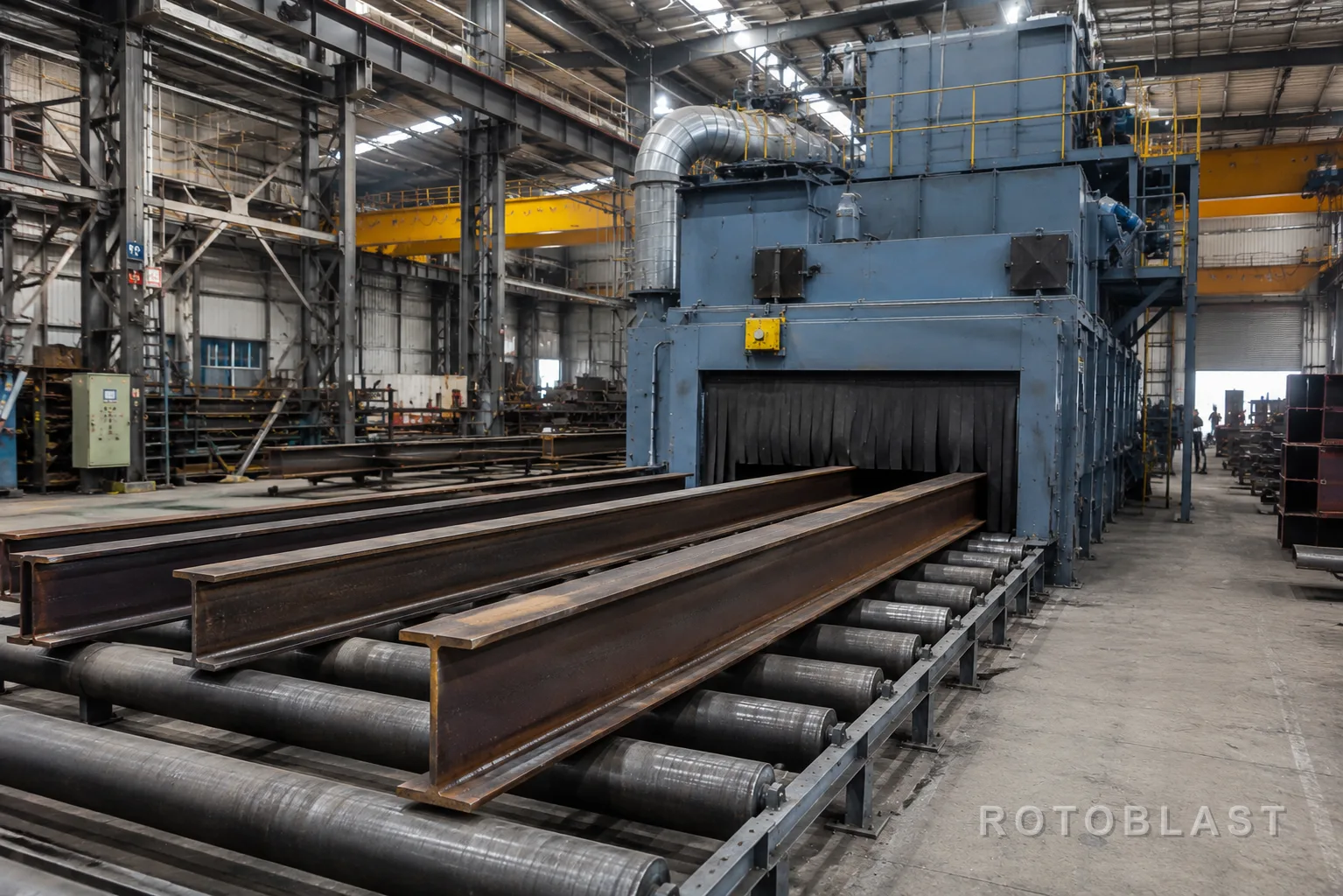
Steel Beams & Columns
Rolled sections fed end-to-end, cleaned on every face in a single pass.
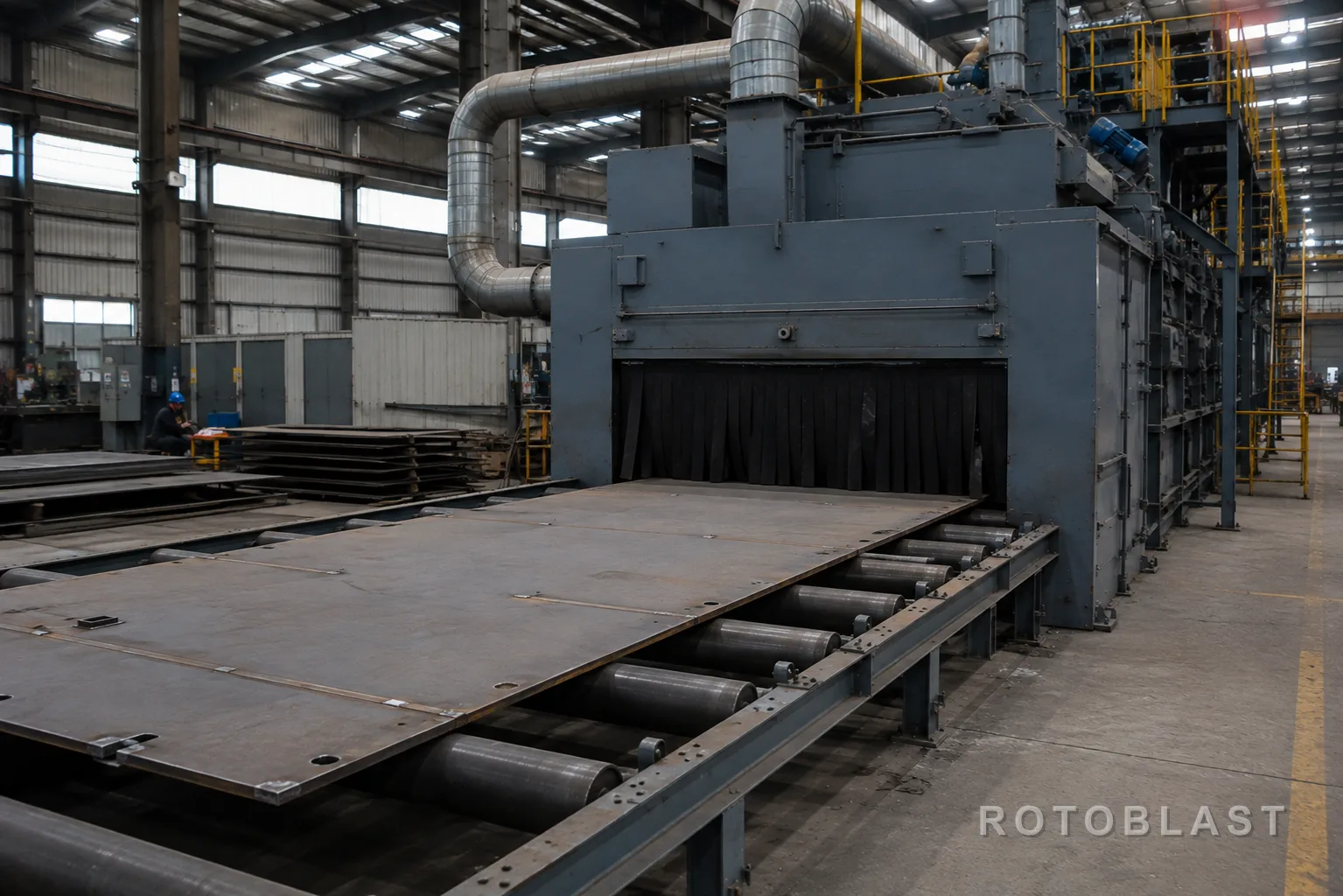
Steel Plates & Fabricated Panels
Flat plate run wide across the conveyor before cutting, forming or welding.
Welded Frames & Machine Bases
Assembled frames carrying weld scale and spatter as well as mill scale.
Surface Specification
The Grade Your Paint Spec Calls For
Your paint specification names a blast grade from ISO 8501-1. That is not a quality preference you can trade away — it is a clause you have to meet, and the machine has to hold it at line speed. Below is what each grade actually means on the shop floor.
- 01Bare steelArrives with mill scale, rust and old coating on it.
- 02Shot blastingStrips all of that off and cuts a controlled roughness into the metal.
- 03PrimerFlows into that roughness and locks on. Smooth steel gives it nothing to hold.
- 04Top coatsThe corrosion barrier. It only lasts as long as the primer underneath holds.
Blasting is not just cleaning. It is what gives the paint something to hold on to.
The grades and profile bands below are the published standards. Which one applies to your job comes from your coating manufacturer's data sheet, not from us.
Required
Sa 2½ · Very thorough blast-cleaning
In simple termsThe steel looks clean and grey, with only faint shadows left. This is what most structural paint specs ask for.
Only faint shadows or slight staining remain. The grade most structural coating systems are written to.
- Anchor profile
- 40–75 µmHeight from valley to peak that the blast leaves. This is the grip.
- Profile grade
- ISO 8503 medium (G)The ISO 8503 comparator plate an inspector checks that roughness against.
- Abrasive
- Angular steel grit, or shot/grit mixWhat produces it — round shot cleans, angular grit cuts a sharper profile.
- Specified for
- Structural steel before primer — the standard specification for fabricated steelwork.Where this grade is normally called up.
What to check before primer
- 01Compare the blasted steel against the ISO 8501-1 photographs in good light. Do it side by side, not from memory.
- 02Measure the roughness with an ISO 8503 comparator or a profile gauge. Clean steel that is too smooth still fails.
- 03Look into corners, back faces and behind stiffeners. That is where the grade is lost, and that is where the coating lets go first.
If the surface is not right
Paint over leftover mill scale and the scale eventually lets go, taking the coating with it. Too smooth and the primer has nothing to key into, so it peels in sheets. Too coarse and the peaks stand proud of the paint film and rust through from those points.
Why Steel Fabricators Choose Rotoblast
- Steel Fabrication Industry Expertise
- Solutions built around structural steel and fabricated assemblies.
- Application-Specific Surface Preparation
- The right profile for painting, galvanizing or assembly.
- OEM-Quality Spare Parts
- Wear parts engineered for long, dependable service life.
- Experienced Service Engineers
- Specialists who diagnose root causes, not symptoms.
- Support Across India & UAE
- Responsive engineering support wherever you produce.
Engineering Knowledge Centre
Practical answers to the surface preparation questions steel fabricators ask most.
Need application advice?
Talk to an EngineerSpecify the Line
Need the Right Shot Blasting Solution for Your Steel Fabrication Plant?
Tell us about your fabricated components, steel sections, production volume, and surface preparation requirements. Our engineers will recommend the most suitable shot blasting machine, engineering service, or OEM spare parts for your fabrication process.
What we need to answer
- 01
- Section profileMaximum section width, height and length running through the shop.
- 02
- ThroughputMetres or tonnes per hour the paint line has to be fed.
- 03
- Coating specificationThe surface standard and profile your paint system calls for.
Send these three and you get a specification back, not a brochure.
Request a quote
Tell us your application, part size and throughput — we'll respond with a specification and price.
Faridabad, Haryana, India
Mon–Sat, 9:30 AM – 6:30 PM IST